Wednesday, May 29, 2013

Macon X

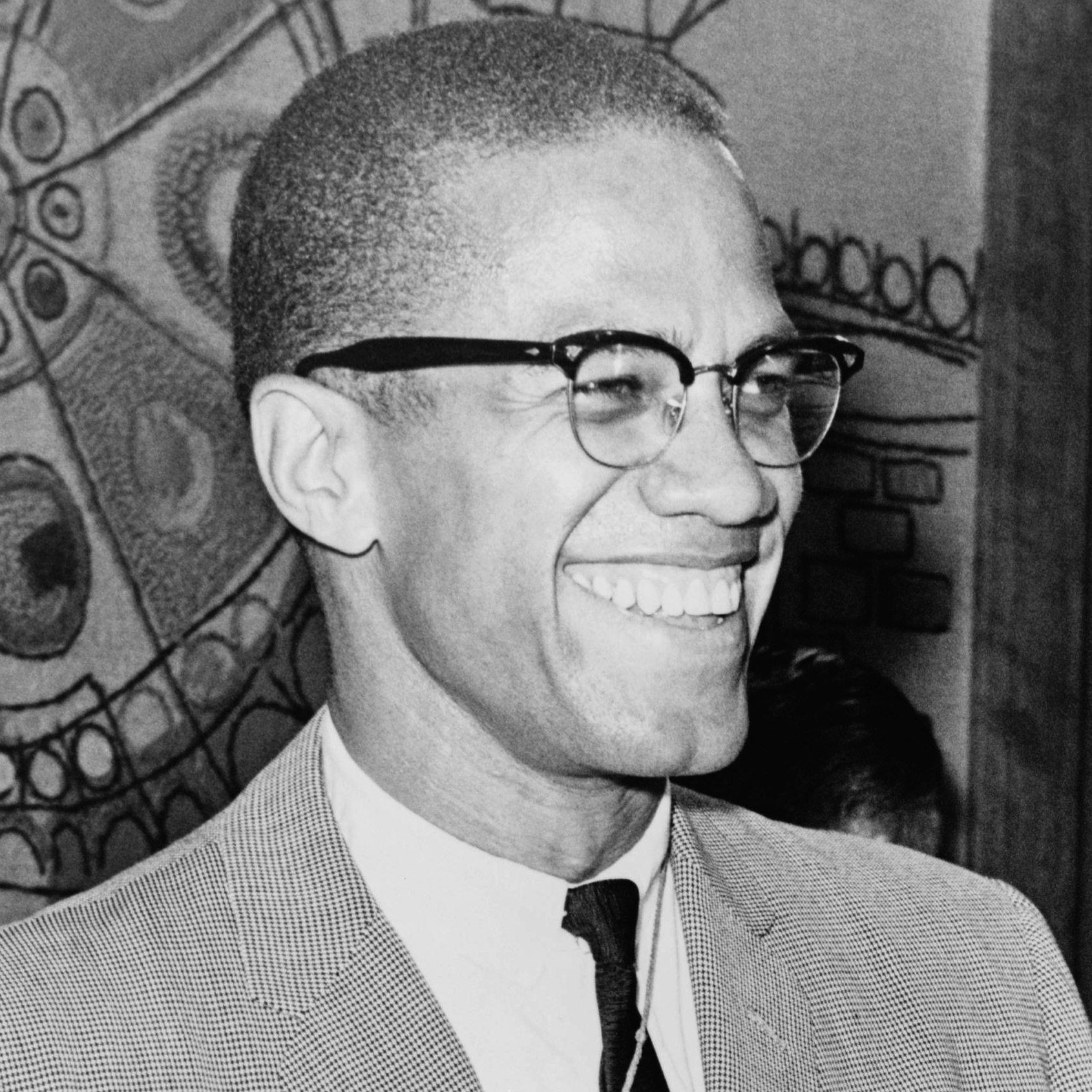
Everything is ending. The school year, season 8 of Grey's Anatomy (tragic), and especially, Song of Solomon. All the good things come to an end. I must accept I've enjoyed the book. At the end it did start to elongate, but towards the end Morrison picked up some speed. I was blown away when Guitar killed Pilate. I mean, Pilate was always invincible. At least this was Macon´s perception of her. And pereceptions change. My perception of Malcolm X shifted enormously today. I always imagined him like Ruby Bridges, a hero since childhood. Instead, I discovered he was one of those African-Americans who try to leave the African partnbehind. And he´s just like Macon Dead. They would literally be best friends. I mean it. both are complex characters that undergo mayor changes throughout their lives. They begin as African-Americans obsessed with resembling the white man. Then, some extaordinary consequence moulds each into new man. Macon stops being self-obsessed and in his search for wealth understands the importance of belonging and family. On the other hand, when Malcolm was a convict he realized what both the Seven Days and the Black Panthers preached: Black is beautiful. Both men then became proud of their roots. 

I didn´t address a more rhetorical perspective because Song of Solomon was quickly outshined by Malcolm X. He is the perfect example of rhetoric moving masses. His ceremonial register, his use of chiasmus (along with othe rhetorcial devices), and concurrent use of pathos and ethos, combined with the sensitive topic many could relate to, made Malcolm X a succesful orator. 

Saturday, May 18, 2013

Black Panther Party vs. Seven Days

So I'm so responsible I'm watching the movie "A Huey P. Newton Story." I'll be analyzing and commenting on it and will try to relate it with Song of Solomon. 

JK. I swear that I can't find a way to watch the movie online. I'll just read a summary on the plot. From what I've understood Huey P. Newton founded the Black Panther Party, a group with the objective of protecting African-American neighborhoods from police brutality. Right off I am reminded of Song of Solomon. Guitar is part of a society called the Seven Days. They murder a white person for every Black person killed. This way they keep the ratio equal. Both societies are groups of African-Americans who fight racism in their own way. 

I was finally able to watch the video! Newton says his party wants equality overall. This means having jobs, food, rights, etc. Sounds like unhealthy African-Americans in Song of Solomon are looking for this. They want to reach this ulterior goal. On the other hand, I don't see Macon trying to achieve these things. He is already satisfied with the material wealth he owns.

Sunday, May 5, 2013

Videoloser


I hope you enjoy it! I'm sorry if you feel it's too long I had a lot to say.

Wednesday, May 1, 2013

America, the Land of the Free

The Tuskegee Institute in Alabama was a "historically Black university... founded by African-American educator Booker T. Washington." This univeristy was well-known because of its "strong emphasis on industrial education as a way for the black emerging from slavery to gain an economic foothold." He noticed that the leaders of the American indutry were giving jobs to the immigrants that entered the country between 1890 and 1920 instead of the African-American ex-slaves. Washington's bucket concept reminds me of Macon Bacon. Or Macon Dead. Hahaha I was so not paying attention. This concept creates a marked difference between races and in these, between the wealthy and the poor. Without the help of the White after they were granted freedom, many African-Americans strived to improve their lifestyles. This is how people like Macon Dead appeared.

Sunday, April 28, 2013

What is Morrison's objective when naming her characters?


I believe Morrison's objective when naming her characters is ti give them depth based on the Bible. For example the Biblical figure Ruth was "a model of loving-kindness" and that "she acts in ways that promote the well-being of others." She is both loyal and obedient. In Song of Solomon Ruth is obedient to Macon's orders because she is better off withstanding the physical and psychological pain than being poor in such a harsh moment for African-Americans. I believe Ruth is complex because I'm not sure if what she does "promotes the well-being of others" or just avoids including her children in her fights.  


Hagar, on the other hand, was a slave. When her mistress and her husband realized they were unable to have children, the husband impregnated her. She realized this and hated her mistress. Because of this the mistress mistreated her and Hagar fled. I have not finished the book but might think Hagar may flee Pilate's house. That's my prediction. We'll see that it is fulfilled. 

Friday, April 26, 2013

Tree Woman

Not too relevant, but Hagar reminds me of my mom. Milkman says she's one of those people who like everything and prefer nothing." Just like my mom, who likes music but doesn't listen to it, likes doing sports but never practices any of them. Just a small anecdote.
More on Hagar, Milkman's lack of interest in Hagar because she was so easy is like working hard to reach a goal. When your finally achieve it, it lacks all purpose. 

-----------------------------

One of the questions we decided we would ask Morrison about the book was related to the recurrent topic of female weakness. On page 96 Hagar and Milkman are discussing how Pilate slightly stabbed the guy Reba was dating because he hit her. Hagar is convinced women are very weak and aren't able to protect themselves unless they are as big as Pilate who is the size of a tree (Milkman's words!). I'll be on the lookout for more mentions of this topic.


Wednesday, April 24, 2013

Commas Save Lives

"Dangling modifier." Ever sice I wrote my research paper on portmanteau words I pay more attention to the parts that compose a term, their dennotation, and connotation. "Dangling" has a vague connotation and to modifiy is to change. My wild guess would be that a dangling modifier causes a slight and vague change.

-------------------------------------------------

 I must accept I expected the article to just explain what a dangling modifier is. But, being AP Lang, nothing goes straight to the point. From what I understood, a dangling modifier is related to the inclusion of an extra phrase which modifies the meaning of what's being said in a not-so vague way. I did have to Google it. I believe the wrong use of commas is also part of the problem because:
 
COMMAS SAVE LIVES!


Wednesday, April 17, 2013

Obsessive Chicks


Marina and the Diamonds, a band, has this song titled “Obsessions.” This has been an important topic in history. Narcissus was obsessed with himself. Rumor has it that Sting wrote "Every Breath You Take" because he had a crazy fan. If you pay attention to Blondie's "One Way or Another" you'll notice they are a little creepy. Check out the 10 Top Creepiest Love Songs. Even like girls and guys nowadays, Pilate was obsessed with Milkman. She passed that very thin line between a lover and an obsessed person. Her passion reached a level in which murdering him was the only option she had since her maniac feelings weren’t returned. This scenario is not only uncomfortable for the whole family, since these two are blood-related, but for Ruth too. Milkman’s mother, the reason for which Milkman has such a nickname, is oh-so jealous. There seems to be lots of intimacy between parents and chidden in the storyline and this may be no coincidence. Ruth is the common denominator. She is a complex character, manipulating those around her and she is kind of a maniac herself and poor Milkman had to endure this until an old age. Poor guy.

Sunday, April 14, 2013

The Hearse of Language

Since the exam is so close right now, I unintentionally pay more attention to literary figures and new vocabulary. For example, of page 38 I found a weird oxymoron:

"Again Guitar spoke up. 'You his daddy's sister?'"

"The only one he got. Ain't but three Deads alive."

Since Dead is a last name I'm not sure if it still counts but included it anyways.

In terms of new vocabulary, I found the word "hearse" in the following context:

"Other than the bright and roving eyes of Magdalene called Lena and First Corinthians, the Packard had no real lived life at all. So they called it Macon Dead's hearse."

Only from context I infer it is obviously a negative word. I don't know why I relate with the word "burden." Anyways, I'm super wrong. A hearse is a vehicle for conveying the coffin at a funeral. And what a vehicle. Woopsies!

Lastly, Pilate's granddaughter, Hagar, has quite a name. She is quite humble and doesn't have much, thus her name reminds me of the word haggard. The latter means "looking exhausted and unwell." Who knows, Hagar might be a portmanteau of the terms haggard and beggar! Both the meaning and spelling fit. I then read on and the Milkman's description of Hagar is so pleasant I now doubt the meaning I gave to the name. With more context things will clear up.

Thursday, April 11, 2013

Oddity and Familiarity

I know Mr. Tangen hates Harry Potter, but I can't help but notice similarities between Percy Weasley and Macon Dead. Macon is the main character, and I wasn't surprised that as the book progresses he has opened up and become more human. Even though he cares a lot about his reputation, money, and property, when he approaches Pilate's house to hear the music Macon exposes weakness. The omnipotent narrator lets us know how he feels. In the Harry Potter series, Percy only cares about rules, he is harsh and serious and his pride denies his return to the Weasley's embrace. At the end he is ashamed and returns to his family. "It all starts and ends with family." Even Lilo and Stitch know this. 

Pilate, Reba, and Hagar all remind me of Colombian mothers who form matriarchal families. They are often left by their significant other when pregnant and many times lead lowly lives. Strangely, Pilate has no belly button, which I relate with humanity and motherhood. This trait is very fantastical since nobody can be born without the umbilical cord. This might represent how other-wordly Pilate seems, "this lady who had one earring, no navel, and looked like a tall black tree." (39)
Odd enough don't you think?


Tuesday, April 9, 2013

Song of a King

In my mind, Solomon is a very Biblical name. In Wikipedia's mind as well. Solomon was the king of Israel and the son of David. The latter was an ancestor of Jesus. Toni Morrison introduces her novel with a very religious connotation, and religion is a large part in the representation of African Americans.

Going back the video we watched in class today, I see the trend Tavis Smiley mentioned about African-Americans putting themselves down. This we can see in Viola Davis' experience when African-American film writers offer her roles such as "ghetto moms." In Song of Solomon, Macon Dead refers to Porter as a "nigger," a word with a very negative connotation and that African-Americans tend to find offending. The fact that they use this degrading word amongst themselves exemplifies this mistreatment because it is now used in their own group. 

Macon Dead also cares about his reputation. He worries about what people think of the only Black with properties and is very harsh with his own crowd. His lack of empathy for Mrs. Bains' case and the insights the omnipotent narrator gives us about Ruth, Lena and  the Milkman's relationship with Macon show that his personality is a harsh, serious one. 


Monday, March 18, 2013

Of Irony and Contradiction

Chapters O, P, and Q all include contradictory statements. This is confusing for the reader. For example, I am used to texts which EXPOSE their points literally. Only this year have I begun to notice the figurative meaning of texts and words. Who'd have known The Tempest is metaliterature!

The first antithetical statement I found was on page 135. Just five words caused such confusion in my mind.

"This sentence is a lie." 

If the sentence were true, then it would be a lie. What is the logic in that! Reality is beginning to resemble a never-ending cycle. The chapter's titled "Contradiction," and Shields has used an example which shows this.

I'm not sure comparing these fragments counts as antithesis of each other but fragment 409 and fragment 418 seem to disagree on the topic of doubt. Fragment 409 says its stupid to conduct experiments if you know the results and its silly to ask questions you know the answer to, such as rhetorical questions. On the other hand, fragment 418 says that "when we are not sure, we are alive."

Contradiction, in my opinion, "can be true and untrue at the same time." (pg. 135)


A song of irony and contradiction.

Wednesday, March 13, 2013

Life in a Nutshell

People have urges to share pieces of themselves. They write about their ideas, feelings, and thoughts. Sometimes, they even focus on their lives and their reality. Then they share life stories. 

Memoirs are a way to share, but I now believe these are like a realistic novel. Thoughts and feelings make the text subjective. They reject the supposed non-fiction of the text. An example is Half a Life. Darin Strauss kept recalling more and more about the incident as we moved through the text and I strongly doubt his repressed memories were resurfacing.
 
Essays, on the other hand, are harder to define. They are largely influenced by opinion and fact, or as Wikipedia would define them, "essays are a piece of writing often written from an author's personal point of view. Essays can consist of a number of elements, including: literary criticism, political manifestos, learned arguments, observations of daily life, recollections, and reflections of the author. The definition of an essay is vague, overlapping with those of an article and a short story. " As usual, Wikipedia did some messy work for me. But lets focus on the last sentence. The term short story stands out. An essay, just like a memoir, can be a short story. They can also be "observations of daily life, recollections, and reflections of the author." I think Strauss's memoir is a recollection of his thoughts. 
How do memoirs and essays relate to postcards stories? They condense tales into a format where people don't get bored. The writer's record only the most impacting recollections of ideas. These ideas have to be most appealing in order to keep the reader in rapt attention. This is a result of living in a world where people want everything now. Oh brave new world.

Tuesday, March 5, 2013

Craving Reality

As I read Chapter G, titled Blur, fragment 188 caught my attention. The person speaking says he likes "to write stuff that's only an inch from life."From this we can infer that his writing is not life, therefore, is a lie. I agree with this and it takes me back to a fragment we read in class today.

"Memory: the past rewritten in the direction of feeling." 

It makes no sense to think one can without your feelings clouding over.

And since I didn't agree with or understand the excerpts from Chapter H, I can only disagree with fragment 243. The writer says we are overwhelmed with information. True. He then writes about the real overwhelming the fictional, which I believe is false. I feel people are so unsatisfied with their lives, what they own, themselves. Most don't live in the present but, instead, embark in an insane adventure of thoughts, feelings, and dreams in search of their private utopia. 

Moving on. Chapter I contains fragments on the reality-based community. Fragment 254 seems most interesting. It says Obama won the election purely by appearing "real": using his Blackberry and playing basketball. He appealed to the masses and succeeded. This is the smartest move a politician can make. Obama portrayed himself as so real people related and became sympathetic. Sometimes, being a lie can be beneficial.


Lewis Carroll: The Pioneer of Portmanteau

First of all, I was actually too happy for my grade. I was actually unsure on whether I should have included information on words with unknown meanings that were not portmanteau, it did seem out of place. We actually discussed the term "offish" and its possible relationship to the word oafish. With context and research it actually didn't fit in. 

I was actually a little disappointed to discover it had been done many times before. I considered myself a pioneer on this topic! Guess I was wrong! Even though I do consider my point on the dichotomy an unseen one, in this world on internet and copyright everything is public. 

In terms of citations I am a little frustrated; my mistakes were avoidable! Not closing commas and paying more attention to the works cited page could have helped improve my paper.

Monday, February 18, 2013

Manifesting Thoughts and Feelings


Ok, for those that aren't 100% sure what a manifesto is, it's a published verbal declaration of motives, intentions, or views of the issuer, whether it's an individual, group, political party, or government. We were supposed to read two different ones, David Shield's Reality Hunger and The Futurist Manifesto. Even though both are manifestos, they can be very different. 

David Shield's Reality Hunger is an artistic manifesto discussing the reality and originality of art in everyday life and the emergence of new forms of art. Regarding this topic. The author believes artistic movements are the artist's personal way to influence art. Art is merely a representation of the perspective the artist has of life. Shields criticizes the genres of literature and art because they have not showed changed through time, but new genres emerged. These are more realistic in terms of the relationship between art and real life. If the Italian poet Filippo Tommaso Marinettmet Shields they would have agreed on thinking the way art changed was beneficial. Marinetti supports the present in term of art and Shields supports the way art changed into a more realistic and crude movement.

Based on these documents, a manifesto is the author's ideas about a topic, in this case Shields and Marinetti's feelings about the evolution of art. 

Wednesday, January 30, 2013

A Linguistic Empire


There is a very close relationship between language and power. For one thing, there is power in knowledge. Therefore, if you speak a lingua franca and others don't, you are more powerful. But, on the other hand, what if you speak a lingua franca and a rare language? Then, you have a huge head start. The more languages you know the easier it is for you to build bridges amongst different cultures. I'm not sure if languages are still as valuable. English is so strong that most people are able to communicate with you if you can't talk to them. So when one language is stronger, it pulls the other one to lose power. 

Economy is also a very important reason to meet halfway. Some were eager to sell, thus they learned English. Others would wait for the merchant to learn their language. It's also a matter of pride. Like Robert Burns, many don't want to treat their language as less important. This happened in India, where the natives weren't eager to learn English. I believe the problem was that the language was imposed, most people didn't want to replace one of India's 200 languages with English. One gets attached to what one cherishes. In this case, people care about maintaining their culture. The host would agree with John Locke, who also thought less misunderstandings would lead to peace, but India's population has something else to say about that. 

Language can also become an empire. Just like Rome, English is close to controlling everything it touches, but will it fall? We discussed it in class, but I'm certain the word "empire" has a negative connotation. Or that's how I think about it.


Monday, January 28, 2013

A No-Talk Empire

A. The word "assassin" comes from the Arabic word hashishin from 1122.

B. The English lexicon is a hard number to find. On this source I found that Shakespeare wrote with about 884,647 words (including proper names) , even though there is a doubt whether a word's derivatives count as words or all are categorized as one word. Our famous "David Crystal, in the Cambridge Encyclopedia of the English Language, suggests that there must be at least a million words in the language. Tom McArthur, in the Oxford Companion to the English Language, comes up with a similar figure." 

C. I recognize most prefixes and suffixes. Prefixes like mono- and penta- I'm very familiar with because of Chemistry. Some are very common, like non- or dis-. In terms of the suffixes, most were easily recognizable such as -ology or -ography.

D. Neologistic borrowings appear especially in the 18th and 19th centuries because of the British Empire and its expansion into India, South Africa, United States, etc. As the British had never been exposed to certain activities or objects they found no remedy other than adopt these words.

E. As we discussed in class, the empire will always impose a language. This language won't just disappear without putting up a fight (or creating new dialects, neologistic borrowings, etc.) In this case, with language lies power. 

F. I believe the 21st century empire is different from the 18th century one, but through certain means English still imposes itself. A clear example is technology and how it controls most aspects of daily life.  By being in English, one must adhere to these changes and try to understand. This is a modern empire.